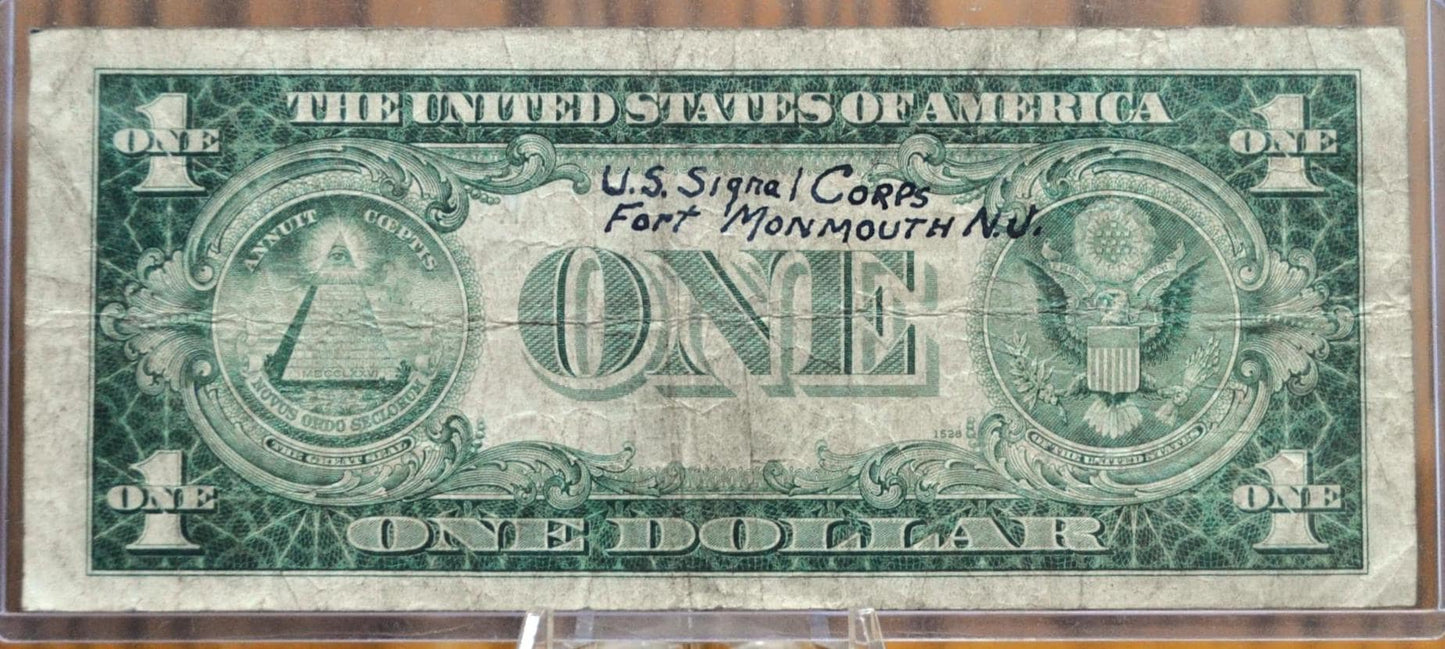


1942 Short Snorter Signed 1935-A Silver Certificate Note - 6.17.42, U.S. Signal Corps, Fort Monmouth - WW2 Short Snorter Silver Certificate
1942 Short Snorter Signed 1935-A Silver Certificate Note - 6.17.42, U.S. Signal Corps, Fort Monmouth - WW2 Short Snorter Silver Certificate
Δεν ήταν δυνατή η φόρτωση της διαθεσιμότητας παραλαβής
This listing is for the photographed 1942 "Short Snorter" Signed 1935-A Silver Certificate Note. This note has no signatures like the typical short snorters, but rather displays "U.S. Army" on the obverse, and "U.S. Signal Corps" and "Fort Monmouth N.J." on the reverse. Dated June 17, 1942, during the height of the Second World War. Very interesting type of short snorter from World War II and displays the cool history of the US Signal Corps during this time! Must have for any collection!
"Short Snorters" were popularized by the U.S. military during World War II, becoming a large part of the popular culture among the infantry during and after the war. These bank notes were signed by one's friends and/or acquaintances as a keepsake. They were most popular with the air force or with those using air travel, as it was commonly seen as a sign of good luck for the soldier to have their note signed before a flight. Short snorters stayed a popular practice during other U.S. military ventures after WWII, but the height of their usage stayed in the 1940s. Short snorters would be filled with signatures, and once servicemen travelled overseas, they would commonly create Short Snorters out of local currency wherever they travelled and attach their collected notes together to create a long sash of dollar bills signed by other servicemen. Today Short Snorters serve as an extremely valuable relic from World War II, giving fascinating insight into the social history of military culture during wartime.
The term "snort" was common slang for a mixed drink in the first half of the 20th century. "Short" was similarly used during this time to signify a less than full measure. Together, the term "Short Snort" was used as slang for a less than full shot of liquor. When airmen started to realize that alcohol and flying airplanes do not mix well, they commonly used short snorts to drink in moderation on flights, which soon led to many airmen jokingly calling each other "Short Snorters." The term started being used as a name for these notes because of the drinking games that would commonly be played using Short Snorters. Service members would each show their short snorters, and whoever had the least number of signatures on their note would pay for the next round of drinks.
During World War II, Fort Monmouth, New Jersey, served as a crucial hub for the United States Army Signal Corps, which played a vital role in military communications, electronics research, and cryptographic advancements. Fort Monmouth was a leading center for the development of radar technology, which was essential for air defense, naval operations, and battlefield communication. The SCR-270 radar, which detected the incoming Japanese aircraft before the Pearl Harbor attack, was developed here. The Signal Corps worked closely with cryptographers to develop secure communication methods, contributing to code-breaking efforts against Axis forces. Thousands of soldiers were trained at Fort Monmouth in radio operations, telegraphy, and other essential signal-related tasks. The school expanded significantly during the war to accommodate the increasing need for trained communication specialists. After WWII, Fort Monmouth continued to be a center for military communications research, leading to advancements in satellite communications and electronic warfare during the Cold War.
Thanks for stopping by!
1942 Short Snorter Signed 1935-A Silver Certificate Note - 6.17.42, U.S. Signal Corps, Fort Monmouth - WW2 Short Snorter Silver Certificate