

RARE 1877 Ottoman Empire 5 Kurush Note - Constantinople Stamp - Seal of Mehmed Kani AH1295 - 1877 Ottoman Empire Five Kurush Note - P#47d
RARE 1877 Ottoman Empire 5 Kurush Note - Constantinople Stamp - Seal of Mehmed Kani AH1295 - 1877 Ottoman Empire Five Kurush Note - P#47d
Не удалось загрузить сведения о доступности самовывоза
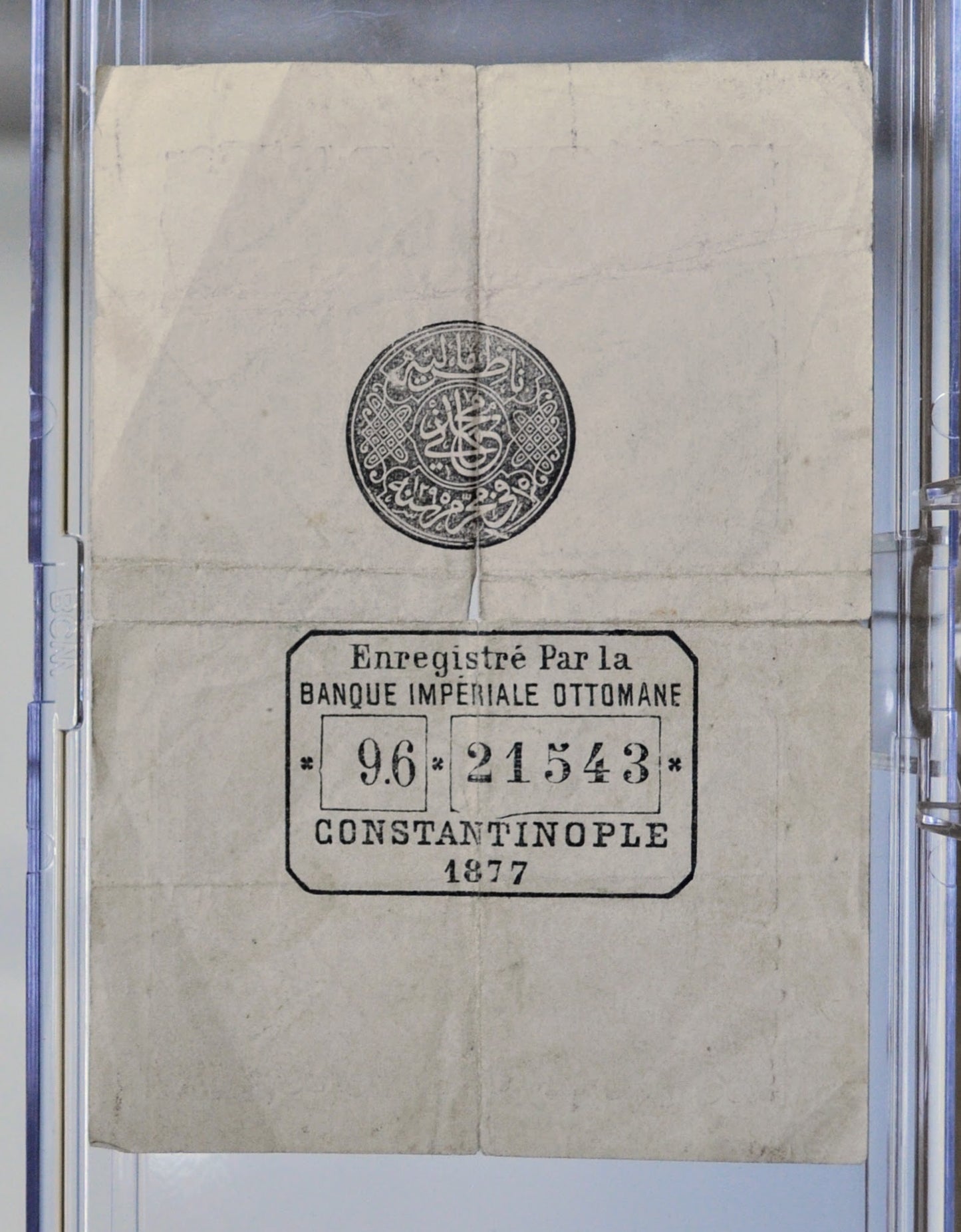
This listing is for the photographed 1877 Ottoman Empire Constantinople 5 Kurush Banknote. Issued by the Ottoman Imperial Bank in 1877, during the Abdulhamid period of the empire. Reverse stamp on the banknote is dated 1877 and identifies that it was issued in the capital of the Ottoman Empire, Constantinople, in modern-day Türkiye. The reverse of the note also has the seal variety of Mehmed Kani, seal #1295, differentiating it from earlier similar issues. Fine (F) grade/condition, visible folds and signs of circulation, as pictured. Excellent rare piece of history, a must have for any collection! P#47d (Pick Number 47d).
The Ottoman Empire, which lasted from 1299 to 1922, relied primarily on coinage for most of its history. The transition to paper money came relatively late, driven by financial pressures and modernization efforts in the 19th century. The akçe, a silver coin, was the standard currency for much of the empire's earlier period, later replaced by coins like the kurush and lira. The first official Ottoman banknotes were issued in 1840 under Sultan Abdülmecid I and were intended to benefit the severe budget deficit and financial strain experienced by the empire during the period. These notes were poorly received, largely due to a lack of public trust and counterfeiting. The first series was withdrawn after only a few years, but further issues followed throughout the 1840s and 1850s, with attempts to improve the design and security.
In 1863, the Imperial Ottoman Bank (Banque Impériale Ottomane) was established in cooperation with British and French investors. It served as both a state bank and a commercial bank and was granted the right to issue banknotes. From the 1860s to early 20th century, the Imperial Ottoman Bank issued banknotes in multiple languages—Ottoman Turkish, French, and later Arabic—and various denominations. These notes were backed by gold and managed with greater financial rigor, making them more stable and widely accepted than the earlier issues. By the early 20th century, especially during World War I, the Ottoman government began to issue large amounts of paper money to finance military efforts, leading to rampant inflation and decreased confidence in the currency. Notes were printed in increasing denominations and with diminishing value. After the fall of the empire and the establishment of the Republic of Turkey in 1923, the old Ottoman notes were gradually replaced with new Turkish banknotes issued by the Central Bank of the Republic of Turkey, which was founded in 1931. Incredibly interesting history!
Thanks for stopping by!
RARE 1877 Ottoman Empire 5 Kurush Note - Constantinople Stamp - Seal of Mehmed Kani AH1295 - 1877 Ottoman Empire Five Kurush Note - P#47d