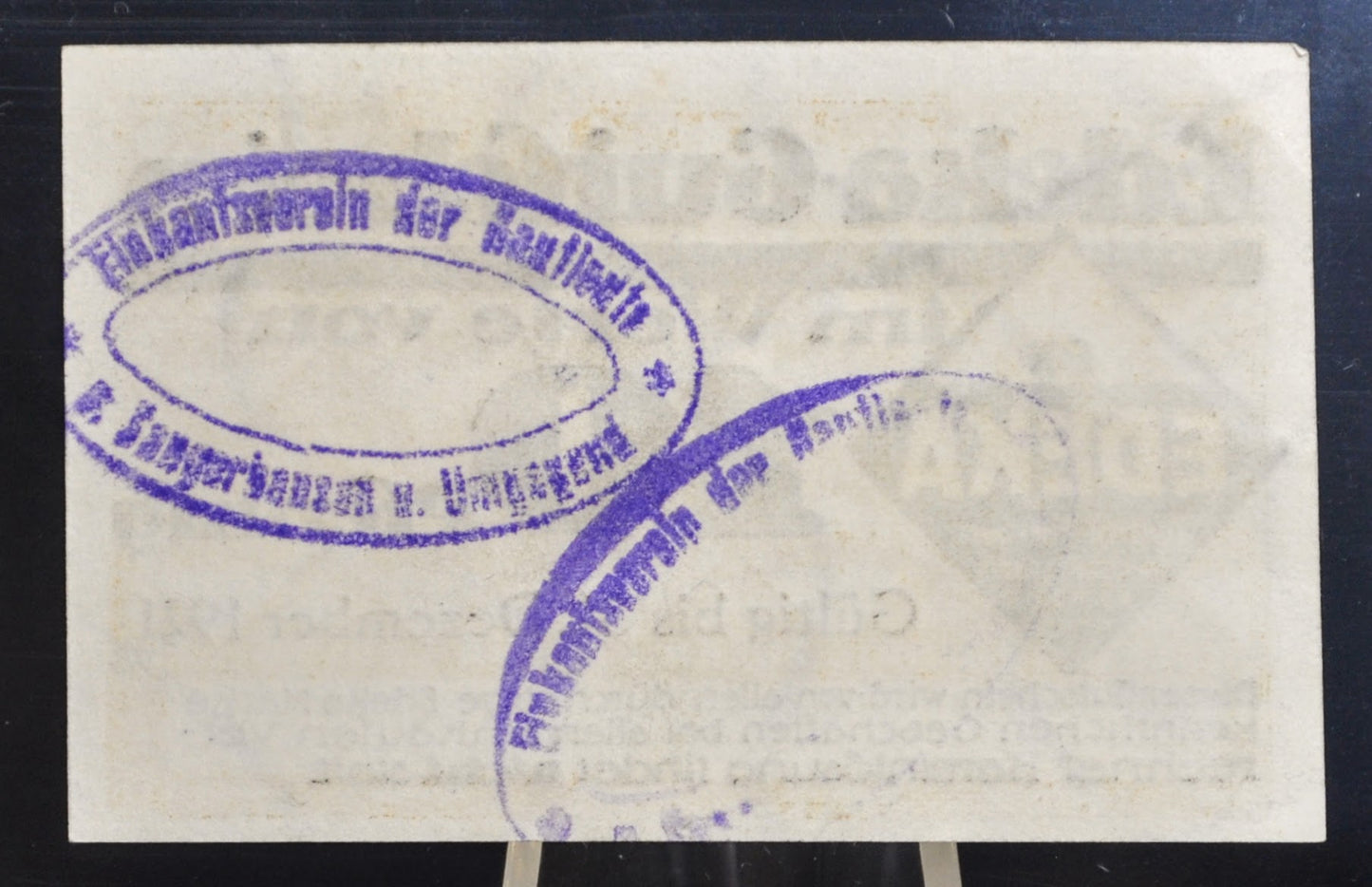


1921 Edeka Market 10 Pfennig Notgeld Coupon - Stamped Sangerhausen Store - German Emergency Currency - 1922 German Store Ten Pfennig Note
1921 Edeka Market 10 Pfennig Notgeld Coupon - Stamped Sangerhausen Store - German Emergency Currency - 1922 German Store Ten Pfennig Note
Det gick inte att ladda hämtningstillgänglighet
This listing is for the photographed 1921 Edeka Markets 10 Pfennig German Notgeld Coupon. Issued by the German store chain "Edeka" in the immediate years following World War I. This note was to be used at any Edeka location and would be validated with a stamp on the reverse once used. This one has two stamps on the reverse, both from the store location in Sangerhausen. This notgeld was only valid until December 31st, 1921. Uncirculated (UNC) grade/condition, crisp note! Rarer type of notgeld as it wasn't from a German municipality but from a chain of stores! Excellent condition and an interesting piece of history!
Edeka’s origins go back to 1898, when a group of Berlin-based colonial goods retailers came together to form the Edeka Cooperative to give small independent grocers more bargaining power against large wholesalers by pooling their purchasing needs. The system was designed not to replace independent shopkeepers, but to strengthen their competitiveness by creating a nationwide network of cooperative suppliers under the Edeka umbrella. By the eve of World War I, the federation had grown into one of the largest retail cooperatives in Germany, with tens of thousands of small shopkeepers linked through the brand. Many products were rationed or substituted with domestic alternatives. Like many companies, Edeka had to deal with daily price swings due to inflation in the aftermath of WWI. To help both member grocers and customers, some regional cooperatives within the Edeka system issued Notgeld, acting as local scrip, filling the gap when small change was unavailable or when inflation eroded the practical use of official Reichsbank notes. Today, Edeka is still known as the largest supermarket cooperative in Germany.
Notgeld was a form of emergency currency that was issued by individual German municipalities or institutions immediately after the First World War when Germany was experiencing a severe economic depression. Most notgeld contained an expiry date, after which the note was deemed invalid. The issued notes of individual municipalities and institutions pulled power from the national Reichsbank and helped to counter currency shortages from the war. Printed using recycled materials, these notes became a popular collector's item because of their attractive colors and designs, leading to the overprinting of notes and eventually hyperinflation.
Thanks for stopping by!
1921 Edeka Market 10 Pfennig Notgeld Coupon - Stamped Sangerhausen Store - German Emergency Currency - 1922 German Store Ten Pfennig Note